read
The Quiet Industrialisation of AI
Gaygisiz Tashli
07/02/2026
Artificial intelligence is no longer a curiosity of laboratories or a buzzword in marketing decks. It is quietly reshaping the global energy landscape and the very infrastructure of computation.
More →read
The Quiet Industrialisation of AI
07 Feb 2026 • By Gaygisiz Tashli
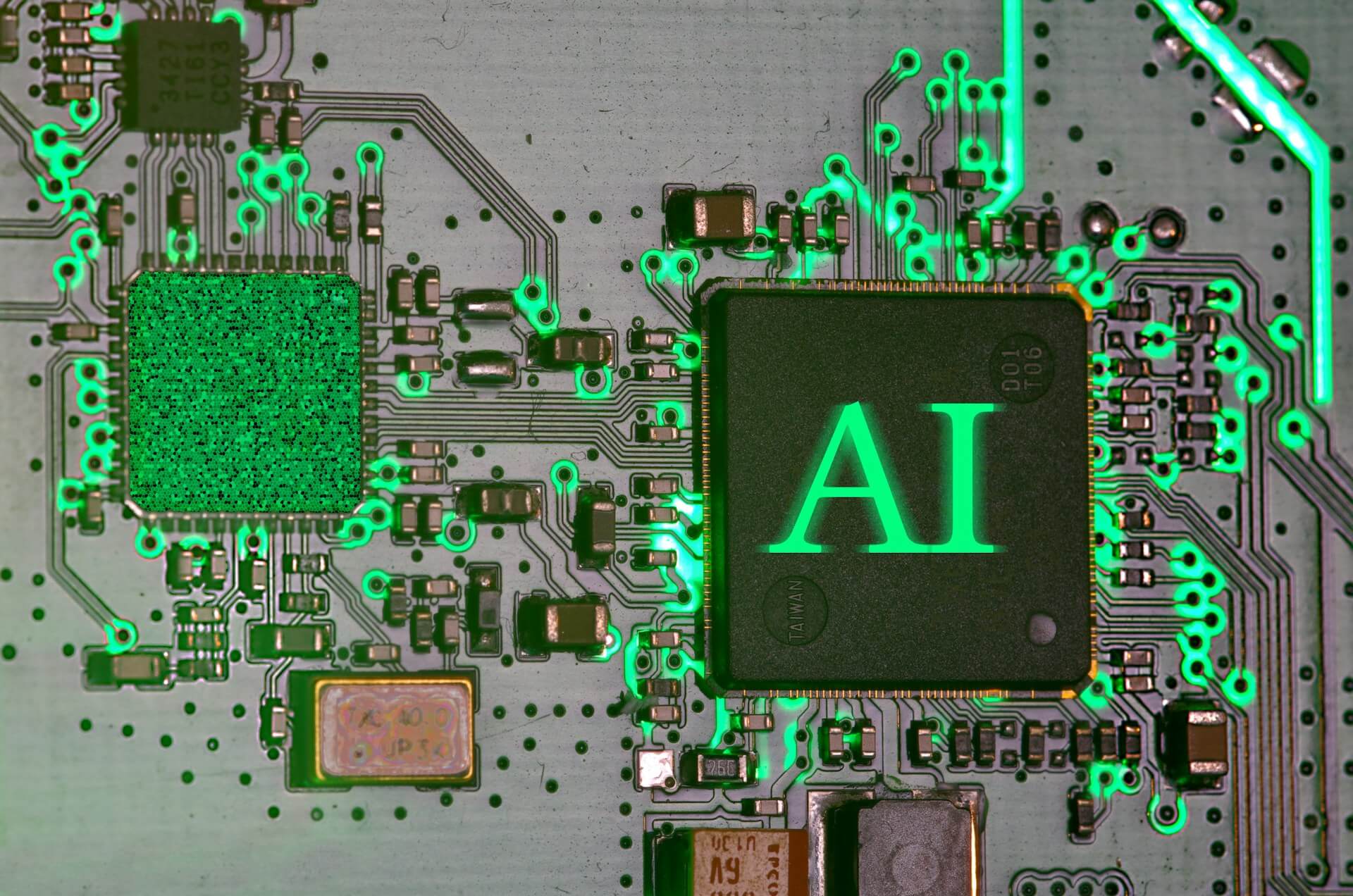
Artificial intelligence is no longer a curiosity of laboratories or a buzzword in marketing decks. It is quietly reshaping the global energy landscape and the very infrastructure of computation.
At the heart of modern AI are massive machine learning models — particularly generative models — that demand ever-greater computational capacity. Training and running these models requires vast arrays of specialized processors housed in hyperscale data centers. These facilities are not peripheral assets; they are the new industrial nodes of the digital age.
AI is transforming data centers into industrial power consumers
Historically, data centers were designed to support web services, cloud storage, and enterprise computing. But AI workloads — especially training large language models — are fundamentally different: they require sustained, high-density processing power that pushes the limits of existing infrastructure. According to Deloitte, the energy consumed by servers and the cooling infrastructure that supports them already accounts for a substantial share of overall data center power use, and this demand is rising rapidly as rack power densities increase and GPU power draw climbs with each generation of hardware.1
Goldman Sachs Research estimates that electricity demand from data centers driven by AI will grow by up to 165% by 2030 compared with 2023 levels — a seismic shift that will require significant new generation and transmission capacity.2
The International Energy Agency projects that global data center electricity consumption could double by 2030, with AI workloads responsible for a disproportionately large share of that growth.3
The grid challenge: power capacity and reliability
What makes AI’s energy footprint uniquely difficult is not just scale, but consistency. Data centers cannot throttle their power use in the way consumer appliances can; they require 24/7 availability with no margin for interruption. Gartner warns that by 2027, up to 40% of AI-focused data centers may be constrained by power availability, because utilities will struggle to keep up with rapid demand growth.4
This has immediate consequences:
-
Utilities must plan for higher baseload demand with longer lead times.
-
Renewable sources like wind and solar offer variable output and require storage or backup generation to ensure reliability.
-
Traditional grid expansions — new transmission lines, substations, and generation capacity — require years of permitting and construction before they come online.
In practical terms, this means AI infrastructure will likely lean on a combination of energy sources in the near term. Nuclear, natural gas, and large-scale hydropower offer the constant output needed by data centers today, while battery storage and grid flexibility technologies evolve.
From efficiency gains to new energy architecture
AI isn’t only a consumer of energy — it is being deployed to manage energy itself. AI-driven systems are increasingly used to optimize load forecasting, balance energy flows, and reduce waste across power grids. Real-time analysis of grid conditions can improve reliability and help integrate variable renewable energy at scale.5
Yet optimization alone cannot substitute for the sheer growth in demand. As computing power becomes industrial in scale, energy planning must be industrial too:
-
Data center design will increasingly incorporate on-site generation and storage.
-
Regions with abundant grid capacity or low-carbon energy will become strategic hubs.
-
New cooling technologies — including liquid cooling and waste-heat reuse — will become indispensable to maintain efficiency.
The frontier ahead
AI’s industrialisation is not merely about computing horsepower. It is about energy systems, infrastructure planning, and global competitiveness. Countries and corporations racing to lead in AI are also racing for grid capacity, renewable integration, and new models of energy production.
What was once a fringe concern — whether AI might someday strain electricity systems — is now a mainstream infrastructure issue. For technology leaders, this reality demands strategic consideration of data center placement, long-term energy sourcing, and the architectural choices that will determine who leads the AI revolution — and who follows.
Gaygisiz Tashli is Chief Executive of Teklip, a tech-first advertising and growth architecture firm working with ambitious brands globally.
A UK Innovator Founder and Imperial College London alumnus, he has helped a global technology company grow from 10 million to 50 million users and led work for organisations including Unilever, Nestlé, and Huawei.
read
Data Centers at the Heart of AI’s Infrastructure Shift
Gaygisiz Tashli
14/01/2026
Artificial intelligence is often discussed as software — models, algorithms, interfaces. In practice, AI is an industrial system.
More →read
Data Centers at the Heart of AI’s Infrastructure Shift
14 Jan 2026 • By Gaygisiz Tashli
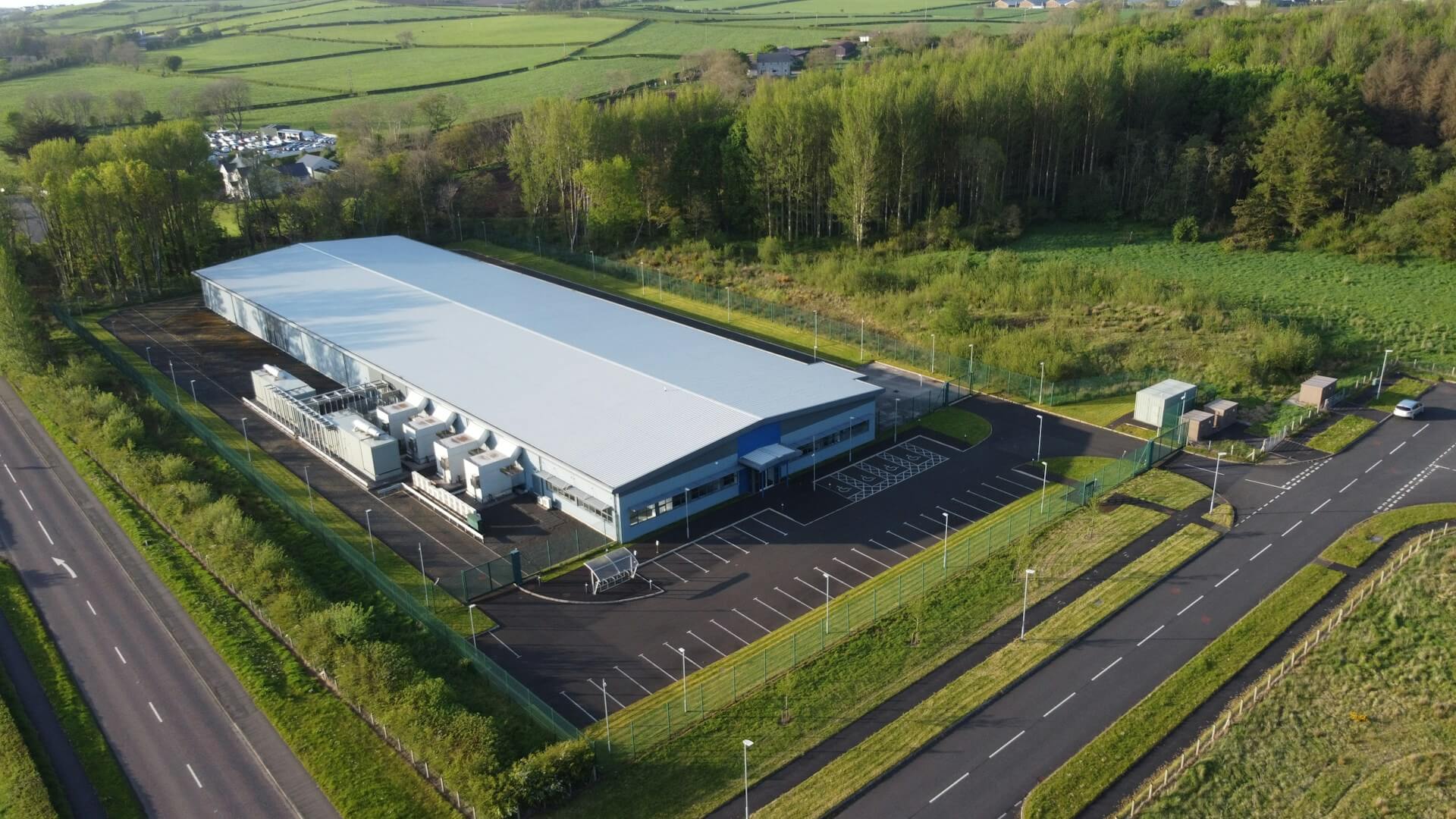
Artificial intelligence is often discussed as software — models, algorithms, interfaces.
In practice, AI is an industrial system.
What determines who leads in AI is not just talent or ideas, but access to compute infrastructure powerful enough to train, serve, and continuously evolve large models. That infrastructure lives in a new class of data centers — and they are fundamentally different from the ones that powered the internet era.
AI Data Centers Are Not Traditional Data Centers
Legacy data centers were designed for storage, transactions, and predictable traffic.
AI data centers are designed for constant, extreme computation.
Three structural differences define them:
1. Power density at industrial scale
Traditional data center racks typically operate in the range of 5–15 kilowatts.
AI-optimized racks routinely exceed 40–100+ kilowatts, driven by dense GPU clusters running at sustained load.
This is not a marginal increase. It changes everything — from electrical design to cooling architecture to site selection.
2. Compute architecture built for parallelism
AI workloads depend on massive parallel processing. As a result, GPUs and custom accelerators (not general-purpose CPUs) dominate AI facilities. These systems are optimized for matrix operations, not conventional computing tasks, and they operate continuously near peak capacity.
The result is a data center that behaves less like an IT facility and more like a manufacturing plant for intelligence.
3. Continuous energy demand, not cyclical use
AI training and inference do not follow normal traffic cycles. Models run day and night. This creates sustained baseload demand that stresses local grids and forces operators to rethink power sourcing entirely.
According to the International Energy Agency (IEA), global data center electricity consumption is expected to more than double by 2030, with AI workloads acting as a primary driver of that growth.
(Source: International Energy Agency)
Why Energy Has Become the Bottleneck
The AI race is increasingly constrained not by talent or capital — but by electricity.
In the United States alone, data centers already account for a meaningful share of total power consumption, and that share is rising rapidly as AI workloads expand. The Pew Research Center notes that data center energy use has become a material planning concern for utilities, regulators, and governments, particularly in regions hosting AI-heavy infrastructure.
(Source: Pew Research Center)
This has consequences:
- Grid access now shapes where AI companies build
- Energy contracts are strategic assets
- Power reliability is as important as model performance
Some operators are already exploring on-site generation, long-term renewable contracts, and alternative energy sources — not for sustainability optics, but for operational survival.
What AI Data Centers Actually Look Like
Below is a simplified view of how AI-specific facilities differ from their predecessors:
|
Dimension |
Traditional Data Centers |
AI-Optimized Data Centers |
|
Primary Hardware |
CPUs |
GPUs & AI accelerators |
|
Power per Rack |
Low–moderate |
Extremely high |
|
Energy Profile |
Variable demand |
Constant baseload |
|
Cooling Needs |
Standard air cooling |
Advanced liquid / high-density cooling |
|
Strategic Constraint |
Cost efficiency |
Power availability |
This shift explains why AI leadership is concentrating among organisations that can secure infrastructure, not just build models.
The Strategic Implication
AI is no longer a purely digital industry.
It is a capital-intensive, energy-dependent, infrastructure-bound system.
The winners of the next decade will not simply be the companies with the best algorithms — but those who understand that intelligence now has a physical footprint, and who plan accordingly.
The future of AI will be written as much in electrical substations and cooling systems as in code.
That is the industrial truth behind the model economy.
Sources
· International Energy Agency (IEA) — Data Centre Energy Demand Projections
· Pew Research Center — U.S. Data Centres’ Energy Use and AI Impact
Gaygisiz Tashli is Chief Executive of Teklip, a tech-first advertising and growth architecture firm working with ambitious brands globally.
A UK Innovator Founder and Imperial College London alumnus, he has helped a global technology company grow from 10 million to 50 million users and led work for organisations including Unilever, Nestlé, and Huawei.
read
Most Technology Advertising Is Strategic Theatre
Gaygisiz Tashli
27/10/2025
Technology companies like to believe they are rational. Data-driven. Performance-led. Metrics-first. And yet, when it comes to advertising, most of them behave emotionally, defensively, and — frankly — irrationally.
More →read
Most Technology Advertising Is Strategic Theatre
27 Oct 2025 • By Gaygisiz Tashli

Technology companies like to believe they are rational.
Data-driven.
Performance-led.
Metrics-first.
And yet, when it comes to advertising, most of them behave emotionally, defensively, and — frankly — irrationally.
Startups obsess over CAC spreadsheets while running ads no one remembers.
Mid-stage companies chase “brand” without knowing what it means.
Large tech firms spend millions producing work that looks impressive internally and disappears externally.
The uncomfortable truth is this:
Most technology advertising exists to justify budgets, not to build markets.
The Startup Fallacy: Performance Will Carry Us
Early-stage technology companies worship performance marketing.
Click-through rates.
Attribution models.
Incremental optimisations.
This makes sense — at first.
But many founders mistake early traction for long-term strategy. They build businesses as if growth is a function of endless optimisation rather than market psychology.
The result is predictable:
- interchangeable messaging
- commoditised positioning
- dependence on paid channels
- zero narrative memory
You acquire users, but you don’t earn belief.
You generate demand, but you don’t shape it.
Performance does not build categories.
Performance exploits existing ones.
The Scale-Up Mistake: Branding Without Conviction
As companies grow, they feel the weakness.
So they add “brand”.
New visual identity.
Big campaign.
Vague manifesto video.
A slogan that could belong to anyone.
This is where things get dangerous.
Brand advertising without strategic clarity is not leadership — it is noise with confidence. It looks ambitious. It feels grown-up. It achieves very little.
Most scale-ups do not suffer from lack of creativity.
They suffer from lack of positioning courage.
They are afraid to narrow.
Afraid to alienate.
Afraid to be understood clearly.
So they choose safety — and safety never builds global relevance.
Big Tech’s Problem: Advertising Without Stakes
Large technology companies face the opposite problem.
They have scale, recognition, and distribution — but their advertising is often bloodless.
Why?
Because when nothing is at risk, nothing feels sharp.
Committees smooth edges.
Legal trims meaning.
Brand teams optimise for internal alignment rather than external impact.
The work becomes “on brand” but off-target.
Visible everywhere.
Felt nowhere.
Market leadership does not come from saying more.
It comes from saying something that settles the question.
What Actually Works (And Always Has)
Despite changing platforms and formats, the fundamentals have not changed.
The technology companies that win do three things relentlessly well:
1. They define the enemy clearly
Not competitors — confusion. Friction. Old ways of thinking. Inefficiency. Fear.
2. They commit to a point of view
They don’t explain everything.
They don’t hedge.
They choose a frame — and own it.
3. They align advertising with leadership, not promotion
Their advertising does not ask for attention.
It assumes authority.
This is why the most effective technology advertising feels less like marketing and more like inevitability.
The Real Strategy for Modern Technology Companies
If you are building for global relevance, advertising is not a channel.
It is a strategic instrument.
It must:
- clarify what you stand for in one sentence
- signal confidence before scale
- reduce buyer uncertainty before sales
- create gravity, not noise
Advertising should make growth easier — not louder.
And that requires architecture, not campaigns.
Where Teklip Enters the Picture
Teklip does not approach advertising as creative output.
We approach it as market design.
We work with technology founders who understand that:
- scale is not a media problem
- brand is not decoration
- growth is not accidental
Our role is not to make companies visible.
It is to make them inevitable.
That means:
- positioning before promotion
- narrative before noise
- confidence before volume
We work founder-to-founder because advertising strategy is a leadership decision — not a marketing one.
A Final Thought
If your advertising feels busy, it’s usually because it’s unclear.
If it feels safe, it’s probably ineffective.
If it feels impressive internally but invisible externally, it’s already failing.
The question is not whether you are spending enough.
It’s whether you are saying the one thing the market needs to hear — and whether you are brave enough to stand behind it.
Most technology companies aren’t.
That’s why the gap exists.
And that’s why it’s valuable.
Gaygisiz Tashli is Chief Executive of Teklip, a tech-first advertising and growth architecture firm working with ambitious brands globally.
A UK Innovator Founder and Imperial College London alumnus, he has helped a global technology company grow from 10 million to 50 million users and led work for organisations including Unilever, Nestlé, and Huawei.
read
The Algorithmic Shelf
Gaygisiz Tashli
29/07/2024
The most important retail shelf is no longer inside supermarkets.
More →read
The Algorithmic Shelf
29 Jul 2024 • By Gaygisiz Tashli

For most of modern retail history, brand power was decided by a physical reality: shelf space. The companies that secured better positioning in stores sold more products. The logic was simple and visible. If a brand occupied the shelf, consumers would see it. If consumers saw it, some would buy it.
Retail strategy therefore revolved around one objective: win the shelf.
Manufacturers negotiated with distributors. Distributors negotiated with retailers. Buyers decided what deserved space. Marketing existed largely to support that process. The shelf was the battlefield, and everything else served it.
That world is quietly disappearing.
Today, the first shelf a consumer encounters is no longer inside a supermarket. It exists inside algorithms.
A shopper may see a product in a recipe video, a TikTok recommendation, a search result, or an AI-generated answer long before they encounter it in a store. By the time they reach a physical aisle, the brand decision has often already been made.
In other words, the shelf has moved upstream.
Search engines, recommendation systems, social platforms, and increasingly artificial intelligence assistants now function as the first place where products compete for attention. These systems do not operate like retail shelves. They do not reward packaging size or distributor relationships. They reward relevance, visibility, engagement, and repeated signals of interest.
Brands that understand this dynamic gain an enormous advantage.
When consumers begin searching for a product category, the names they encounter repeatedly across digital environments shape their expectations. They see a product used by a chef online. They encounter it in recipe content. They hear about it through cultural conversations or community recommendations. Algorithms amplify what appears popular, useful, or trusted.
By the time the shopper walks into a supermarket, the algorithmic shelf has already influenced the decision.
This is why some products enter retail with immediate momentum while others remain invisible despite being widely available. The difference is not distribution. The difference is discovery.
Retail buyers understand this more than many manufacturers realize. They monitor search behaviour, online trends, and cultural signals because these indicators reveal which products consumers are already noticing. When a brand demonstrates that people are actively looking for it, the conversation with retailers changes dramatically.
Instead of asking for shelf space, the brand begins to justify it.
For food producers and consumer goods companies, this shift is particularly important. Many brands still assume that their primary task is to secure distribution and wait for visibility to follow. Yet the modern consumer rarely discovers a product for the first time in a supermarket aisle.
Discovery happens earlier.
It happens when someone searches for a recipe. When a creator demonstrates a product in a video. When a cultural trend introduces a new ingredient to a broader audience. When an AI assistant surfaces a product as the most relevant answer to a question.
These moments form the new retail shelf.
Companies that understand this reality treat digital visibility not as marketing decoration but as infrastructure. They invest in search presence, cultural relevance, creator ecosystems, and information architecture that ensures their brand appears wherever algorithms assemble answers.
The result is powerful. When consumers repeatedly encounter a product in digital environments, the brand becomes familiar before it ever appears in a physical store. Retailers are not introducing something unknown; they are stocking something already recognized.
This is how the algorithmic shelf reshapes the physical one.
The implication for producers — particularly those expanding into new markets — is profound. Distribution alone no longer determines which brands win retail space. Algorithms increasingly shape the demand that retailers respond to.
A company that ignores this shift risks entering stores quietly and leaving just as quietly. A company that understands it can arrive with momentum already forming around its name.
In the algorithmic era, the shelf still matters. But it is no longer the beginning of the story.
It is the final confirmation of a decision that was often made long before the shopper walked through the door.
Gaygisiz Tashli is Chief Executive of Teklip, a tech-first advertising and growth architecture firm working with ambitious brands globally.
A UK Innovator Founder and Imperial College London alumnus, he has helped a global technology company grow from 10 million to 50 million users and led work for organisations including Unilever, Nestlé, and Huawei.
read
The Distribution Illusion
Gaygisiz Tashli
10/01/2024
Why companies believe distribution equals growth — and why it usually doesn’t.
More →read
The Distribution Illusion
10 Jan 2024 • By Gaygisiz Tashli

For decades, growth in consumer markets has been explained through a simple formula: expand distribution, increase visibility, and sales will follow. It is a comforting idea. It suggests that growth is primarily a logistical challenge — one that can be solved by reaching more stores, more shelves, and more markets.
Yet this logic has quietly misled many otherwise capable companies.
Distribution creates presence. It does not create demand.
Across food, consumer goods, and technology products, one pattern repeats itself with remarkable consistency: brands succeed not because they appear everywhere, but because consumers actively look for them. When that pull exists, distribution accelerates growth. When it does not, wider distribution simply spreads the same weak demand across more locations.
This difference is subtle, but it is structural.
In practice, companies often assume that the moment they reach a new retailer or a new geography, growth will naturally follow. Distributors extend networks, retailers allocate shelf space, and exporters celebrate new listings. But within months a familiar problem emerges: the product is present, yet movement is slow. The shelf exists, but the brand does not command attention.
At that moment the illusion becomes visible.
The mistake lies in confusing access with preference. Retail access determines whether a product can be purchased. Consumer preference determines whether it will be purchased. The two are frequently treated as the same thing, but they operate on entirely different layers of the market.
Distributors play a vital and legitimate role in this system. They build relationships with retailers, manage logistics, and enable brands to reach markets that would otherwise remain inaccessible. Their networks are often the bridge that allows a product to cross borders or enter complex retail environments.
But distribution networks cannot manufacture consumer desire on their own.
Retailers ultimately allocate space to the products that move. Buyers are pragmatic. If a brand demonstrates velocity, visibility increases. If it does not, space quietly contracts. Over time the shelves reshape themselves around the brands that consumers consistently choose.
This is why the strongest brands rarely begin with distribution alone. They begin with demand architecture.
Demand architecture is the deliberate construction of consumer pull before, during, and after distribution expansion. It means that when a product appears on a shelf, a portion of the market already recognizes it, searches for it, or trusts it. The role of distribution then shifts from introducing the brand to scaling it.
In the past, this architecture was built primarily through mass advertising. Television, print, and large-scale media campaigns created broad awareness that eventually translated into retail demand. Today the mechanisms have changed, but the principle remains the same.
Demand is now engineered across digital ecosystems.
Search behaviour, social platforms, algorithmic discovery, creator networks, and increasingly artificial intelligence systems shape how consumers encounter brands long before they enter a physical store. A shopper may discover a product on TikTok, confirm its credibility through search results, and only then encounter it on a supermarket shelf. By the time the physical purchase happens, the brand decision has often already been made.
In this environment, distribution without demand becomes even more fragile.
A product can technically be available in hundreds of stores and still remain invisible to consumers. Meanwhile, another brand with strong digital presence and cultural relevance may generate consumer requests that push retailers to stock it, even before formal distribution agreements expand.
Retail history offers many examples of this dynamic. Categories that appear crowded on shelves are often dominated by a small number of brands that succeeded in creating consistent consumer pull. The remaining products circulate through distribution networks but rarely secure long-term dominance.
This pattern is now accelerating in markets where traditional “ethnic” or niche products are entering mainstream consumption. Mediterranean foods, international sauces, specialty grains, and other globally influenced categories are increasingly appearing in major retail environments. The opportunity for producers is significant, but the same structural rule applies: presence alone is not enough.
Brands that treat distribution as the starting point of their strategy may find themselves constantly negotiating shelf space without ever securing it permanently. Brands that build demand alongside distribution shape the category instead of reacting to it.
None of this diminishes the importance of distributors or retail partnerships. On the contrary, strong distribution remains essential. But it must operate within a broader growth architecture where consumer recognition, cultural relevance, and digital discovery are intentionally engineered.
The companies that understand this distinction will move faster than their competitors.
As more products compete for limited shelf space, the market will increasingly reward brands that arrive with demand already forming around them. Retailers will continue to welcome products through distribution networks, but the brands that stay — the ones that expand from one shelf to many — will be those that combine access with pull.
Distribution opens the door.
Demand determines who walks through it and stays.
Gaygisiz Tashli is Chief Executive of Teklip, a tech-first advertising and growth architecture firm working with ambitious brands globally.
A UK Innovator Founder and Imperial College London alumnus, he has helped a global technology company grow from 10 million to 50 million users and led work for organisations including Unilever, Nestlé, and Huawei.
read
Quantum Computing Is Not Late. It Is Early on Purpose.
Gaygisiz Tashli
06/12/2023
A note to the future, written in December 2023.
More →read
Quantum Computing Is Not Late. It Is Early on Purpose.
06 Dec 2023 • By Gaygisiz Tashli

A note to the future, written in December 2023.
In 2015, blockchain looked like a curiosity.
A whitepaper.
A handful of developers.
A promise that felt abstract, almost academic.
Those who understood systems — not headlines — saw something else:
a structural shift waiting for infrastructure, not belief.
Quantum computing sits in the same place today.
Not because it is failing.
But because it is being built correctly.
The Mistake People Are Making in 2023
The dominant narrative around quantum computing in 2023 is simple — and wrong:
“It’s not ready.”
“It’s decades away.”
“It’s mostly theory.”
This is how early-stage technologies are always misread.
Quantum computing is not waiting for use cases.
It is waiting for engineering maturity.
And that distinction matters.
What Actually Exists Today (Quietly)
By 2023, quantum computing is no longer theoretical.
It is experimental — and operational.
- IBM has demonstrated quantum processors exceeding 100 qubits and published a public roadmap toward scalable systems.1
- Google has shown quantum advantage on narrow, well-defined problems.
- Error correction, coherence times, and qubit connectivity — the unglamorous work — are improving incrementally, not explosively.
This is exactly what early infrastructure looks like.
Not consumer-facing.
Not commercially dramatic.
But real.
Why Progress Looks Slow (And Isn’t)
Quantum systems do not scale like software.
They scale like physics.
Each additional qubit introduces:
- exponential noise complexity
- error propagation challenges
- thermal and material constraints
This is not a bug.
It is the cost of working at the edge of computation itself.
The companies making real progress are not the loudest ones.
They are the ones spending years improving things that never make headlines.
That is how foundational technologies are built.
A Pattern Worth Remembering
Every foundational shift follows the same arc:
- Academic curiosity
- Experimental validation
- Infrastructure hardening
- Invisible adoption
- Sudden inevitability
In 2023, quantum computing is firmly between steps 2 and 3.
Which is exactly where serious observers should start paying attention — not when the press does.
What Quantum Computing Will Not Be
It will not replace classical computing.
It will not run everyday applications.
It will not be consumer-facing.
That expectation is naïve.
Quantum computing will be:
- specialised
- asymmetrical
- strategically decisive in narrow domains
Optimisation.
Materials science.
Cryptography.
Simulation problems classical machines struggle to approximate.
This is not a general-purpose revolution.
It is a structural one.
Why This Matters Now
The future rarely announces itself loudly.
It arrives quietly, inside labs, roadmaps, and footnotes — until suddenly it is everywhere and irreversible.
In 2023, quantum computing does not need belief.
It needs patience.
Those who dismiss it now will rediscover it later — framed as inevitable.
Those who understand it now will recognise the moment when it crosses from experimental to strategic.
That moment will not be signposted.
A Note Left Here, Intentionally
This is not a prediction.
It is a marker.
A reminder that technological shifts do not begin when they become fashionable.
They begin when the work becomes boring.
Quantum computing has reached that phase.
Which is why the future is already underway — quietly.
Gaygisiz Tashli is Chief Executive of Teklip, a tech-first advertising and growth architecture firm working with ambitious brands globally.
A UK Innovator Founder and Imperial College London alumnus, he has helped a global technology company grow from 10 million to 50 million users and led work for organisations including Unilever, Nestlé, and Huawei.
read
The End of Cheap Attention
Gaygisiz Tashli
02/11/2022
Why growth stopped being a media problem and became a trust problem.
More →read
The End of Cheap Attention
02 Nov 2022 • By Gaygisiz Tashli

For more than a decade, growth was mistaken for a media problem.
If you could buy attention cheaply enough, fast enough, and at scale, the rest followed.
Distribution hid weak positioning.
Performance metrics masked shallow demand.
Capital smoothed over inefficiency.
That era is over.
Not temporarily.
Structurally.
What Broke Wasn’t Marketing. It Was the Assumption Behind It.
In 2022, many companies discovered the same thing at the same time:
- Acquisition costs rose sharply
- Conversion rates softened
- Performance channels stopped compounding
- “Optimisation” no longer produced growth
This wasn’t a platform issue.
It wasn’t a creative issue.
And it wasn’t a talent issue.
It was the collapse of cheap, abundant attention as a growth input.
For years, attention behaved like an infinite resource.
In reality, it was a subsidy.
When the subsidy ended, the system revealed its weaknesses.
Why Optimisation Stopped Working
Optimisation assumes a stable system.
You test variables.
You adjust inputs.
You squeeze marginal gains.
But in 2022, the system itself changed.
Privacy constraints tightened.
Targeting degraded.
Signal quality declined.
User behaviour shifted.
Optimising inside a broken structure does not restore growth.
It only delays recognition.
This is why teams worked harder — and achieved less.
The Real Constraint Is Trust
Attention can be rented.
Trust cannot.
When attention was cheap, trust was optional.
When attention became scarce, trust became the bottleneck.
Users hesitate.
Buyers verify.
Markets remember.
Brands without clarity now pay more to say less — and convert worse for it.
The uncomfortable truth is this:
Most companies were never building trust.
They were arbitraging attention.
What the Winners Are Doing Differently
The companies still growing in 2022 are not “better at ads.”
They are:
- clearer in what they stand for
- harder to misunderstand
- easier to remember
- trusted before the click
They invest less in constant persuasion and more in market certainty.
Their growth doesn’t spike.
It holds.
That distinction matters more than velocity.
Why This Won’t Reverse
There is no return to the old model.
Regulation will not loosen.
Platforms will not restore old signal depth.
Consumers will not become less selective.
Any strategy built on the hope that attention will become cheap again is already obsolete.
Growth now depends on:
- positioning before promotion
- narrative before performance
- trust before reach
This is not philosophy.
It is constraint-driven reality.
What This Means for Leadership
Marketing can no longer be treated as an output function.
It is now:
- a strategic responsibility
- a long-term asset
- a leadership decision
The question facing companies in late 2022 is not:
“How do we get cheaper clicks?”
It is:
“What must the market believe about us for growth to resume?”
Everything else is a tactic.
A Closing Observation
Cheap attention hid weak thinking.
Its disappearance is not a crisis.
It is a filter.
The next phase of growth belongs to companies willing to build belief before demand — and structure before scale.
Those who adapt will grow more slowly — and more durably.
Those who don’t will optimise endlessly, and wonder why nothing moves.
Gaygisiz Tashli is Chief Executive of Teklip, a tech-first advertising and growth architecture firm working with ambitious brands globally.
A UK Innovator Founder and Imperial College London alumnus, he has helped a global technology company grow from 10 million to 50 million users and led work for organisations including Unilever, Nestlé, and Huawei.
read
Distribution Is the New Product
Gaygisiz Tashli
10/06/2020
Why what you can reach matters more than what you build.
More →read
Distribution Is the New Product
10 Jun 2020 • By Gaygisiz Tashli

For years, technology companies told themselves a comforting story:
“If the product is good enough, growth will follow.”
2020 has exposed how fragile that belief really was.
What the Last Few Months Have Made Obvious
In a matter of weeks, entire markets froze.
Physical channels vanished.
Customer behaviour changed overnight.
Demand did not disappear — access did.
Some companies stalled immediately.
Others accelerated faster than their own forecasts allowed.
The difference was not quality.
It was not innovation.
It was not even speed.
It was distribution.
The Product Myth
Product has been romanticised.
Founders are taught to believe that excellence is self-propagating — that markets eventually “discover” what deserves to win.
That has never been true at scale.
Markets do not reward quality.
They reward availability, familiarity, and trust.
In stable times, weak distribution can hide behind steady demand.
In unstable times, it is exposed instantly.
June 2020 is not a black swan.
It is a stress test.
And most products are failing it.
What Distribution Actually Means
Distribution is not a channel.
It is not a platform.
It is not a growth hack.
Distribution is the system that decides whether your product ever gets considered.
It includes:
- how people discover you
- where you show up by default
- how often you are encountered
- how little explanation you require
A product without distribution is not early.
It is invisible.
Why This Shift Is Structural
What we are seeing now is not temporary disruption.
Digital adoption has been pulled forward by years.
Habits have changed permanently.
Convenience thresholds have reset.
Consumers are not waiting for things to return to “normal.”
They are forming new expectations.
And distribution systems — once built — rarely unwind.
This means the companies winning in 2020 are not just surviving disruption.
They are locking in future advantage.
The Uncomfortable Hierarchy
In practice, markets now reward companies in this order:
- Those who are easiest to access
- Those who are easiest to understand
- Those who are easiest to trust
- Those who are best
Product quality still matters — but it is no longer the entry ticket.
It is the differentiator after access is secured.
This hierarchy feels unfair.
It is also accurate.
What This Means for Founders
If you are building a company in 2020, the real question is no longer:
“How good is our product?”
It is:
“How does our product reach people by default?”
If the answer relies on:
- chance discovery
- word-of-mouth alone
- future brand investment
Then growth is fragile, no matter how strong the product feels today.
Distribution is no longer a growth phase.
It is a design requirement.
Why This Will Be Misunderstood
Many will interpret this moment tactically:
- more spend
- more channels
- more content
That misses the point.
Distribution is not volume.
It is architecture.
It is the deliberate construction of paths through which demand flows — repeatedly, predictably, and without persuasion.
That work is slow.
Unfashionable.
Often invisible.
Which is why most companies avoid it.
A Note Written Intentionally
This is not advice for surviving a crisis.
It is a record of a transition.
From a world where products competed on merit
to one where they compete on reach, clarity, and presence.
Those who understand this in 2020 will not need to relearn it later — when the cost of entry is higher and the market less forgiving.
The companies that endure will not be the ones who built the best products.
They will be the ones who ensured their products could not be ignored.
Distribution is no longer downstream of product.
It is the product.
Gaygisiz Tashli is Chief Executive of Teklip, a tech-first advertising and growth architecture firm working with ambitious brands globally.
A UK Innovator Founder and Imperial College London alumnus, he has helped a global technology company grow from 10 million to 50 million users and led work for organisations including Unilever, Nestlé, and Huawei.
read
We Don’t Act Like an Agency. We Act Like the Co-Founder Who Owns Growth.
Gaygisiz Tashli
29/07/2013
Most advertising agencies are vendors. They wait for briefs. They respond to requests. They optimise what already exists.
More →read
We Don’t Act Like an Agency. We Act Like the Co-Founder Who Owns Growth.
29 Jul 2013 • By Gaygisiz Tashli

Most advertising agencies are vendors.
They wait for briefs.
They respond to requests.
They optimise what already exists.
That model made sense when marketing was a function.
It collapses the moment growth becomes existential.
Startups don’t fail because their ads are weak.
Scale-ups don’t stall because their creatives are average.
Technology companies don’t lose relevance because they lack campaigns.
They fail because no one is architecting growth end-to-end.
That is the gap Teklip exists to fill.
The Missing Role in Modern Companies
Every serious company has:
- a founder responsible for vision
- a CTO responsible for technology
- a CFO responsible for capital
Very few have someone who truly owns:
- market perception
- demand creation
- narrative consistency
- growth logic across stages
Marketing is fragmented across tools, teams, and tactics.
Advertising is treated as output, not leverage.
So companies grow fast — and then grow blind.
We step into that blind spot.
What It Means to Act Like a Co-Founder
We don’t “support” marketing.
We take responsibility for it.
That means:
- thinking in years, not campaigns
- designing systems, not stunts
- protecting positioning before chasing reach
- saying no when the wrong growth looks tempting
A co-founder does not ask, “What should we post?”
A co-founder asks, “What must the market believe for this company to win?”
Everything else follows.
Growth Architecture, Not Advertising Output
Advertising is the visible layer.
Growth architecture is what holds it up.
We work with startups and scale-ups to build:
- positioning that survives scale
- narratives that travel across markets
- demand systems that compound, not decay
- clarity that reduces friction at every stage
This is not about being louder.
It is about being structurally harder to ignore.
When growth is architected properly, advertising stops feeling like effort.
It starts feeling like gravity.
Why Data Alone Is Not Enough
Many firms claim to be data-driven.
Data without judgment produces optimisation, not leadership.
We use technology, analytics, and experimentation — but always in service of a strategic hypothesis:
- What must change in the market’s mind?
- What resistance are we dismantling?
- What belief unlocks the next phase of growth?
Numbers tell you what is happening.
Architecture decides why it matters.
Risk Is Not Recklessness
Playing safe is the most expensive risk in growth.
We test.
We challenge.
We move before certainty appears.
But never randomly.
Every risk we take is anchored to a point of view about the market.
Every experiment exists to reduce future uncertainty — not inflate activity.
Innovation without intent is noise.
Innovation with structure becomes advantage.
Trust Is the Real Moat
We work founder-to-founder for a reason.
Because honesty travels faster than politics.
Because clarity beats comfort.
Because growth decisions cannot be diluted by committees.
We tell clients when something won’t work.
We slow them down when speed would hurt them.
We align incentives around outcomes, not optics.
This is how trust compounds.
The Only Goal That Matters
Our job is not to make brands visible.
It is to make them matter.
To help companies:
- earn belief before demand
- build relevance that survives cycles
- translate ambition into market reality
Advertising is temporary.
Impact is durable.
We exist to build lasting impact.
A Closing Thought
If you are looking for an agency to execute ideas, there are many.
If you are looking for a partner who:
- thinks like an owner
- carries the weight of growth
- designs the system before pressing “go”
Then you are already asking the right question.
Growth is not a department.
It is a responsibility.
We take it personally.
Gaygisiz Tashli is Chief Executive of Teklip, a tech-first advertising and growth architecture firm working with ambitious brands globally.
A UK Innovator Founder and Imperial College London alumnus, he has helped a global technology company grow from 10 million to 50 million users and led work for organisations including Unilever, Nestlé, and Huawei.




read
Social Engineering + Data Engineering
02 Oct 2024 • By Gaygisiz Tashli
There is a quiet misunderstanding in advertising that has lasted for years. Most people still believe the industry is built around campaigns—ideas, visuals, media buying, and execution. That belief is convenient, but it is not accurate.
At its core, advertising has always been something else. It has always been a form of social engineering.
The brands that shaped markets did not simply communicate. They influenced how people think, what they trust, what they choose, and eventually what they buy. They built familiarity over time, created cultural relevance, and positioned themselves in a way that felt natural to the consumer. The strongest ideas did not disappear after a campaign cycle. They stayed. Sometimes for decades.
That is what real advertising does. It does not just appear—it embeds.
The problem is that most of the industry does not operate at that level. Many agencies have reduced advertising to execution. They produce content, launch campaigns, optimise performance channels, and report results. But they rarely design how a brand should be perceived in the first place. They move fast, but without direction. They create activity, but not always impact.
We never approached it that way.
At Teklip, we have always treated advertising as a system that starts with behaviour. Before thinking about channels or formats, we focus on how a brand should be understood, how it should be trusted, and how it should position itself in the mind of the consumer. That is the foundation. Everything else follows.
This is where social engineering becomes real. Not as a concept, but as a discipline.
However, the environment in which advertising operates has changed. And this change is not cosmetic—it is structural.
We are no longer dealing only with people. We are dealing with systems.
Search engines, recommendation algorithms, social platforms, and now AI interfaces determine what is seen, what is suggested, and what is considered relevant. Discovery no longer begins in a store or even in a campaign. It begins in a feed, a query, or an algorithmic recommendation.
This is where traditional thinking starts to break.
Because social engineering alone—no matter how strong—is no longer enough to scale a brand.
You can shape perception, but if you do not shape how systems recognise and distribute your brand, that perception remains limited. It does not reach the scale required to influence markets.
This is why a second layer has become essential: data engineering.
Not reporting dashboards or surface-level analytics, but the deliberate structuring and use of data to influence how systems behave. Understanding how demand signals form, identifying where attention concentrates before it becomes obvious, and ensuring that your brand consistently appears in the environments where decisions are made.
Data, in this sense, is not a support function. It is a growth mechanism.
When you combine the two disciplines, the picture becomes clearer. Social engineering shapes how people think about your brand—its meaning, its trust, its relevance. Data engineering ensures that this perception is distributed, reinforced, and surfaced at the right moments, in the right places, to the right audiences.
One without the other creates imbalance. A brand built only on social engineering may be compelling but invisible at scale. A brand driven only by data may be visible, but without meaning. Neither wins in the long term.
The advantage now belongs to those who integrate both.
This is how we operate.
We do not separate creative thinking from data systems. We do not treat advertising as a campaign or data as a report. We design environments where perception and visibility are engineered together, where demand is not hoped for but structured, and where growth is not accidental but built.
That is why our work is measured differently. Not by impressions or short-term engagement, but by whether the product actually moves, whether the brand gains ground, and whether the position we build can hold over time.
Because in the end, markets are not shaped by activity. They are shaped by outcomes.
And outcomes, when done properly, are never left to chance.
Gaygisiz Tashli is Chief Executive of Teklip, a tech-first advertising and growth architecture firm working with ambitious brands globally.
A UK Innovator Founder and Imperial College London alumnus, he has helped a global technology company grow from 10 million to 50 million users and led work for organisations including Unilever, Nestlé, and Huawei.
Share
X Facebook Linkedin Email Copy Link